
Do Hard Things: Challenges
Doing hard things isn’t about suffering for the sake of suffering.
It’s about deliberately choosing challenges that are just hard enough to stretch you—without breaking you—and then following through. Over and over again.
There’s a simple truth we’ve seen play out in training, in business, and in life:
The more you can do, the more you can do.
That doesn’t happen by accident. It happens because capability compounds.
Why Challenges Matter
When most people think about “hard things,” they picture extremes—ultra events, massive life changes, or some all-or-nothing transformation. That mindset usually leads to one of two outcomes:
- They never start.
- They start too big, fail hard, and quit.
The better approach is simpler and far more effective: select hard but achievable challenges, complete them, reflect, then stack the next one.
Confidence isn’t built by hype. It’s built by evidence.
And evidence only comes from action.
Small Challenges, Real Results
Over the years, we’ve run a lot of personal and group challenges at Hi-Line. Most of them weren’t dramatic. None of them required special gear. All of them produced results.
Some examples:
- Don’t spend money for 7 days
- Don’t use a vehicle for 7 days
- No TV, no streaming, no background noise for 7 days
These aren’t about deprivation. They’re about exposure—exposing habits you didn’t realize were running you.
When you remove convenience, entertainment, or comfort, you’re forced to engage with discomfort and solve small problems manually. That’s where capability grows.
Then there are the longer challenges:
- Do yoga every day for 30 days
- Run or walk one mile every day for 30 days
Nothing about these is impressive on its own. But the consistency is the point. You show up tired. You show up busy. You show up unmotivated. And you do it anyway.
That’s training.
Bigger Goals Are Just Smaller Tasks Stacked
This idea shows up everywhere especially in shooting.
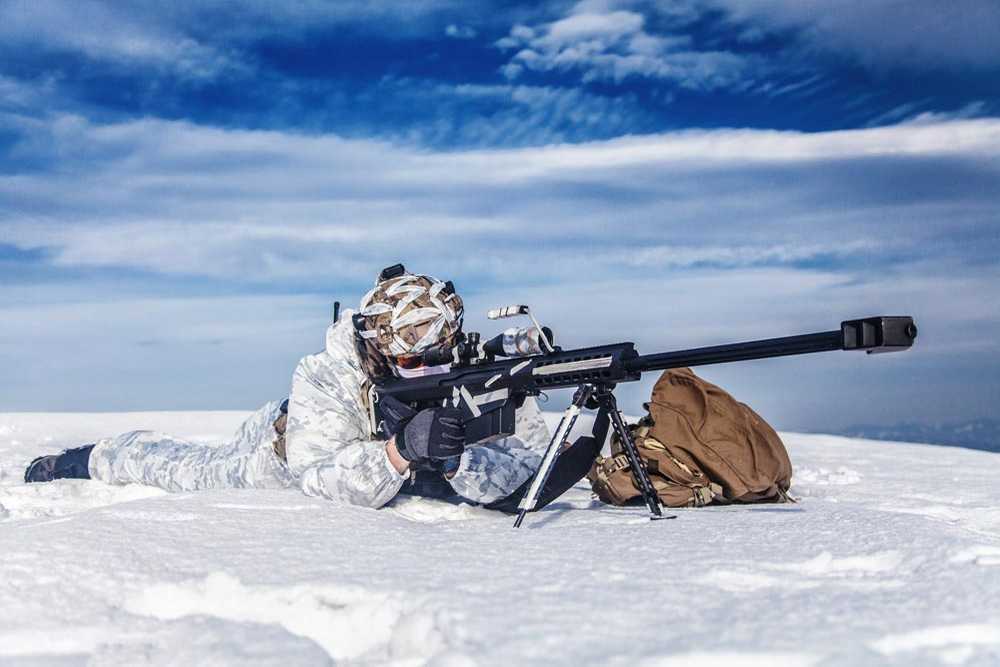
People talk about hitting a target at 1 mile or getting their first 1,000-yard hit like it’s one singular event. It’s not. It’s dozens—sometimes hundreds—of small decisions and skills stacked together.
- What rifle?
- What caliber?
- What bullet?
- Factory ammo or hand-loads?
- Do you need to learn to reload?
- Do you understand external ballistics?
- Can you read wind?
- Can you manage recoil?
- Can you build a stable position?

That list keeps going.
This process is called chunking—breaking a complex task into manageable pieces that can be trained, tested, failed, adjusted, and repeated.
No one wakes up and casually accomplishes a 1-mile hit. They earn it by working the chunks.
Failure Is Not Optional
We have a lifelong friend—he has a doctorate in materials engineering, now a professor—who put it perfectly:
“If you want to increase your success rate, you need to double your rate of failure.”
That’s not motivational talk. That’s math.
Failure isn’t the opposite of progress. It’s part of the equation. The problem isn’t failing—it’s avoiding failure so aggressively that you never attempt anything worth doing.
Choosing challenges means accepting that some of them won’t go cleanly. You’ll miss days. You’ll quit early. You’ll misjudge difficulty.
Good. That’s data.
How to Start
If you’re not sure where to begin, start small and specific:
- Pick a challenge with a clear start and end
- Make it uncomfortable, not destructive
- Remove ambiguity—define the rules
- Finish it, even if it’s ugly
Once you complete it, don’t rush to the next one. Take inventory. What changed? What got easier? What didn’t?
Then choose again.
Capability stacks. Confidence follows.
Do Hard Things—On Purpose
Doing hard things isn’t about proving anything to anyone else. It’s about building trust with yourself.
When you repeatedly choose challenges and work through them—successes and failures alike—you become harder to shake. Problems look smaller. Goals feel closer. Pressure becomes familiar.
That’s the point.
Choose the challenge.
Break it into pieces.
Accept failure.
Finish anyway.
Then do it again.
Do Hard Things.