
Part 1 of 3: Finding the Right Firearm for the Person
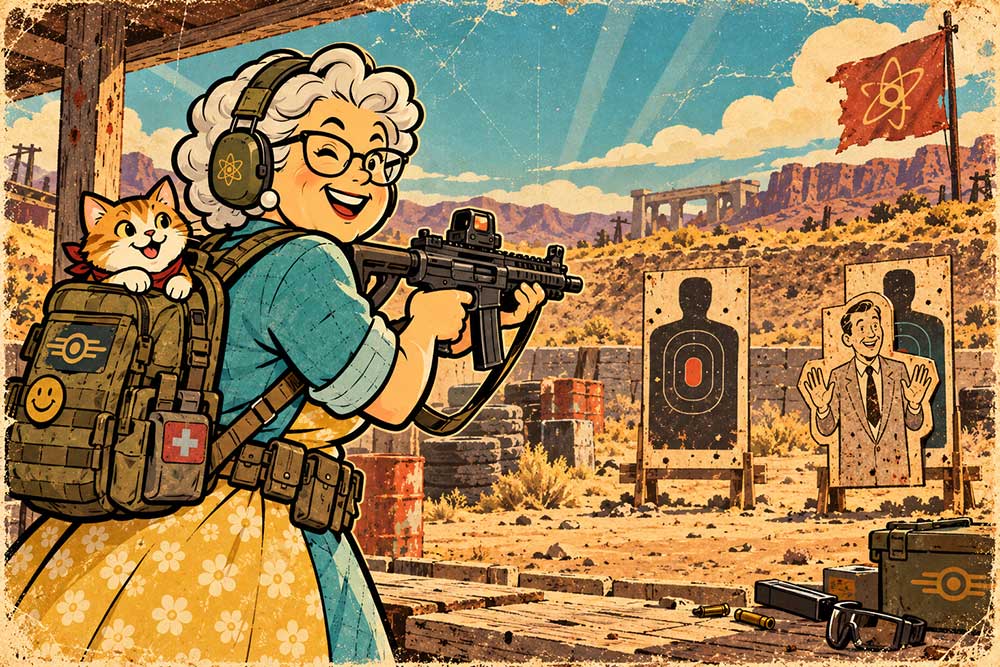
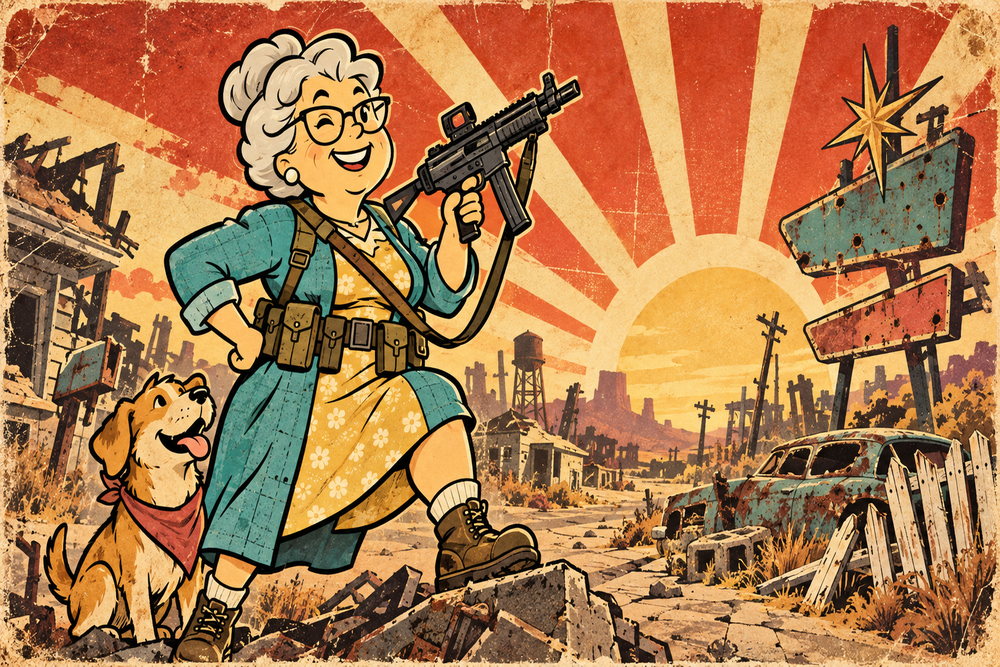
A few weeks ago, a friend called and asked if I would help her pick out a firearm for home defense. She’s 73, a grandmother, and while she had inherited a couple of firearms over the years, she had very little experience actually using any of them. Safe handling, how the controls worked, what to expect at a range: all of it was new territory.
That’s exactly who our Zero to Hero course was built for. The idea is simple. Take someone who knows nothing about firearms and, step by step, bring them to the point where they can handle one safely and confidently. Not an expert in an afternoon, but a solid, responsible foundation they can keep building on.
This series follows her through that process in three parts. First, we figure out which firearm actually fits her and the way she intends to use it. Next, we get her familiar with it at home, long before any live ammunition is involved. Finally, we take everything she’s learned to a supervised live-fire session and see how it holds up. Crawl, walk, run.
Her question sounded simple, but it isn’t. There’s no catch-all answer, and I’m always a little suspicious of anyone who can recommend the perfect firearm before asking a single question about the person who will be using it. So before recommending anything new, I told her I wanted to see what she already had.
Start With What You Have
I’m a big advocate of training with what you own before buying something new. Most inconvenient features can be overcome with training, sets, and reps, and not every problem requires a new purchase.
A defensive shotgun is a good example. You can make an argument for a pistol-grip stock or a particular configuration, but if someone already owns an otherwise suitable shotgun with a traditional stock, there may be no reason to replace it. Learn to run what you have, understand its limitations, and train around them.
That said, there is a point where a firearm simply doesn’t fit the person or the job. Finding out whether we’d reached that point was the whole purpose of the first session.
Philosophy of Use
Before opening the safe, we talked about POU, or philosophy of use. I didn’t come up with the term. Credit goes to a firearms educator I followed years ago, back before everyone was called a content creator. The idea is straightforward: what do you actually need this equipment to do?
For her, the answer was home defense. She lives in a fairly typical house in a small neighborhood, not out in the woods or miles from the nearest neighbor. That doesn’t automatically rule out a rifle, but it does change the conversation.
We talked about her home, her experience, her physical capabilities, and what she could comfortably handle. We also talked about the fact that a firearm is only one part of a home-defense plan. Secure storage, knowing where family members are, having a way to call for help, and understanding when to avoid a confrontation altogether all matter just as much.
Then we started looking at what she owned.
The AR That Almost Worked
Naturally, she brought out a classic 16-inch AR with all the fixings: optics, accessories, and enough stuff bolted on to make you wonder whether the rifle had gone shopping on its own.
Most of that could come off. A simpler setup with a lightweight red dot and a light would have made it more manageable, and plenty of people run that platform very effectively. The issue for her was the overall length, the weight, and how the rifle fit her body. None of that made it a bad firearm. It just made it a less-than-ideal choice for this particular person.
We also talked about ammunition, since she lives in a neighborhood. I’ve heard the argument that 5.56/.223 is overpowered for that environment, but that’s too broad a statement. Penetration depends on the specific ammunition, what it encounters, and the surroundings. There’s no magic cartridge that eliminates the risk of a projectile passing through walls or other barriers.
Could we have made the AR work? Probably. But “we can make it work” isn’t the same thing as “this is the best fit.”
The Cowboy Gun Collection
Next came what I’d call the cowboy guns. We are in Montana, after all.
Heavy steel, substantial cartridges, plenty of recoil, and in some cases fairly limited capacity. There were some beautiful firearms in that collection, but beauty wasn’t the main consideration. A strong, experienced shooter might handle some of them without much trouble, and training can overcome a lot. But when someone can barely lift a firearm comfortably, building a defensive plan around it isn’t a reasonable starting point.
This is where the conversation stopped being about what I liked and became entirely about what she could use.
A Firearm Fitting Room
So the safe opened up. Think of it like a dress fitting, but with firearms. We tried different platforms, weights, grips, and configurations to see what felt natural to her.
At 73, how much effort it takes to work the action and controls was a big factor. We confirmed every firearm was unloaded, kept live ammunition out of the handling area entirely, and used inert snap caps to see how easily she could manipulate the controls and chamber a round.
Some firearms that looked perfect on paper were eliminated almost immediately, and others surprised us. Specifications tell you a lot, but they can’t tell you how a particular firearm feels to a particular person.
We had nearly settled on a lightweight, short AR-style platform when I remembered one more option.
The One That Changed the Conversation
I’d been experimenting with an everyday-carry setup that offered a little more capability than my usual pistol, and I’d been keeping a pistol-caliber carbine, or PCC, in a backpack. I brought it out and handed it to her.
The reaction was immediate. “Ohhh… now this feels good.”
It was one of those moments where the whole process suddenly made sense. The PCC was light enough for her to handle comfortably, the size felt manageable, and the shoulder-supported platform gave her a level of stability she appreciated right away.
That’s a big deal. Pistols can be excellent defensive tools, but pistol craft takes real work, and unless you stay on top of your training, it’s easy to become far more confident than your actual performance justifies. A shoulder-supported platform can make certain aspects of handling easier for some shooters, and in her case the difference was obvious.
This wasn’t about declaring the PCC the winner of some internet argument. It was about watching someone pick up a firearm and feel more comfortable with it than with anything else we’d tried.
Why a PCC Made Sense for Her
Depending on the model, PCCs have a lot going for them. Many are relatively lightweight, offer useful magazine capacity, and come in compact configurations that are easier for some people to handle. They also pair a pistol cartridge with the added support of a shoulder-fired platform.
Capacity is one of those subjects that always starts an argument. Many PCCs use 30-round magazines as standard, though that varies by platform and jurisdiction. There’s an old joke about how many rounds you need in a gunfight: “All of them.” The point isn’t that you should fire every round you have. It’s that nobody gets to predict the circumstances of a defensive encounter in advance. Capacity is one consideration among many, never a substitute for judgment, accuracy, or training.
For her, the bigger considerations were fit, manageable weight, and the ability to operate the firearm confidently. A platform with impressive specs isn’t much use if the owner struggles to handle it.
Keep the Setup Simple
I’m also a believer in keeping a defensive firearm relatively simple. A sling, a straightforward optic, and an appropriate light are all worth considering, but none of them should be added just because there’s an empty rail or because somebody online says you need them.
A sling helps retain and manage a long gun when you need your hands for something else. A simple red dot can make sighting easier for some shooters, though it still has to be learned and maintained. Iron sights remain a perfectly legitimate option, and the choice should depend on the shooter and the firearm.
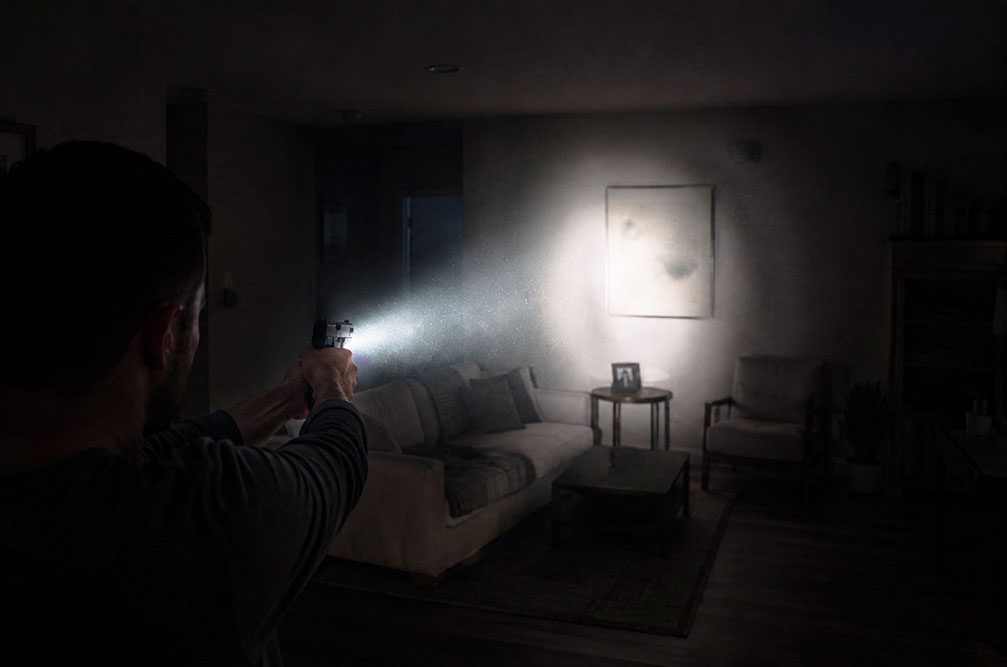
Then there’s the light. We’ve covered this already in “You Can’t Identify What You Can’t See,” but it bears repeating: you need to be able to positively identify what you’re looking at. Darkness, poor lighting, and unexpected situations don’t care how good your equipment looks. A weapon-mounted light is not a substitute for a handheld flashlight, and a firearm should never be used as a flashlight to investigate something that hasn’t been identified as a threat. That distinction matters, especially inside a home.
The goal isn’t the most accessorized firearm possible. It’s a manageable, reliable setup the owner understands and can use responsibly.
Looking Cool Is Still Important
Once we’d identified a platform that fit her, I did a little preliminary shopping to see which models met the criteria. And, of course, which ones looked cool. Number one rule is looking cool.
That’s a joke, mostly. There’s nothing wrong with liking the equipment you own. The problem comes when appearance becomes the deciding factor and things like fit, reliability, handling, and training get pushed aside.
We found an option she liked, waited for a sale, and she made her purchase. It took a few weeks to arrive, and she’s now picked it up.
The Purchase Is the Beginning
The biggest takeaway from this first step isn’t that everyone should buy a PCC. It’s that the right firearm is the one that fits the person, the intended use, and the training they’re willing to put into it. For some people that’s a pistol. For others, a shotgun or rifle they already own may be the best answer. There are plenty of good options, and plenty of poor choices when those options get matched to the wrong person.
Start with what you have. Ask what you actually need it to do. Be honest about your capabilities and limitations, and don’t confuse buying equipment with becoming proficient.
In her case, we found a platform she was comfortable with and excited to learn. Now comes the important part.
What’s Next: Part 2
Later this week, she’s coming over so we can start getting familiar with the firearm. We’ll cover safe handling, the controls, how it functions, and the basic procedures she needs to understand before going to the range. We’ll also use unloaded, inert practice to introduce the commands and flow of a live-fire session, so her first time at the range isn’t also her first time hearing everything.
The goal isn’t to rush her into shooting. It’s to make sure she understands what she’s handling, knows what to expect, and has a foundation to build on. Then, in Part 3, we’ll head to the range and put that preparation to work.
That’s what Zero to Hero is really about: taking a new shooter from uncertainty to confidence, one step at a time. The purchase is the easy part. The work comes next.