Why Every Long Gun Needs a Sling
If it’s long enough to shoulder, it probably deserves a sling.
PCC? Yes. AR? Yes. Scoped rifle? Yes. Unscoped rifle? Yes. Shotgun? Yes. Dad’s old .308 deer rifle that has been sitting in the safe for decades? Yep. That too.
We spend a lot of time talking about optics, lights, triggers, stocks, magazines, ammunition, and all the other things we bolt onto firearms. The sling tends to get treated as an afterthought, but it really should not. A sling is one of the simplest pieces of equipment you can add to a long gun, and it solves one of the most basic problems you have when carrying one.
Eventually, you are going to need your hands for something else.
Most of the Job Is Not Shooting
In the tactical world, very little of the job is actually shooting. A whole lot more time is spent walking, standing, driving, patrolling, talking on a radio, opening doors, moving equipment, helping someone, eating chow, or simply waiting around for something to happen.
Through all of that, you still have a rifle.
Enter the sling.
You cannot reasonably spend hours holding a rifle in both hands. At some point you need to do something else, but you also do not necessarily want to put the rifle down. A sling fixes that problem. It keeps the firearm attached to you while freeing your hands to do everything else that needs to be done.
That alone is enough reason to have one.
The Holster for Your Rifle
We are pretty particular about holsters for pistols. We want retention. We want the firearm secure. We want it in a predictable location. We want to be able to use our hands without wondering where the pistol went.
Then people buy a rifle and somehow decide none of those things matter anymore.
A sling essentially performs the same basic job for a long gun. It gives the firearm somewhere to live when it is not actively in your hands. You can transition to another task without setting the rifle against a tree, leaning it against a truck, laying it on the ground, or handing it to somebody else.
More importantly, it stays attached to you.
Do Not Lose the Rifle
Comfort and convenience are nice, but retention is more important.
In a widely seen incident in the fall of 2020, a rifle-armed defender ended up on the ground while another person attempted to gain control of the rifle. We are intentionally leaving names and the larger event out of this discussion because that is not the point.
The point is the rifle.
Real life does not guarantee that you will remain standing upright with two hands perfectly wrapped around your firearm. People fall. They trip. They get grabbed. They get knocked down. They climb over things, crawl under things, move through vehicles, and use their hands for other tasks. In a worst-case situation, somebody else may even try to take the firearm away from you.
The rifle in that 2020 incident remained with the person carrying it. Whatever someone thinks about the larger event, it serves as a very public reminder that retaining control of a firearm can matter just as much as carrying it in the first place.
Most of us will hopefully never find ourselves in anything remotely resembling that situation. But you might slip crossing a creek. You might fall climbing a hill. You might need both hands to help somebody over a fence. You might be dragging a deer, carrying equipment, climbing a ladder, or simply trying to eat lunch.
Your rifle still needs somewhere to go.
One Point, Two Point, Three Point
This is where we could turn the article into 2,000 words arguing about sling configurations.
We are not going to.
There are basically three common arrangements: single point, two point, and the increasingly elusive three point sling. They all accomplish the same fundamental thing. They attach the firearm to you.
There are advantages and disadvantages to each, and different platforms lend themselves to different setups. Maybe you like a single-point sling on your suppressed 10.3-inch dedicated CQB setup in .300 Blackout that you only run subs through. Very tactical.
Maybe you like a simple two-point sling on Dad’s old bolt-action .308. Also perfectly fine.
You may find that one sling gives you better control while moving, while another feels less restrictive. One may transition more naturally for the way you use the firearm. Mounting locations also change how the sling behaves. Those differences matter, but not enough that you should spend six months debating them while your rifle continues to have no sling at all.
Pick the style that works for you, and then actually use it.
The Mysterious Three Point Sling
Somewhere out there is a person who still loves the three-point sling.
We know you exist.
Three-point slings add another section of webbing between the attachment points, creating a loop that interacts with both the firearm and the shooter. They can provide good retention, but they also add more material and complexity than most modern shooters want to deal with.
They were considerably more common years ago. Today, single and two-point designs tend to dominate, but that does not make the three point wrong. If you have one, understand it, like it, and train with it, carry on.
The sling police are not coming.
Probably.
Fit Matters
Like everything else attached to a firearm, a sling needs to actually fit the person using it. Too loose and the firearm bangs around everywhere. Too tight and suddenly you are fighting your own equipment.
Where the sling attaches matters too. A sling that works perfectly on one rifle may feel terrible when attached to another, and the same sling can feel completely different depending on where the attachment points are located.
Spend some time with it. Walk around. Shoulder the firearm. Let it hang. Use both hands for something else. Put on the jacket, chest rig, hunting pack, armor, or whatever other equipment you actually use with that firearm.
Something can feel perfect standing in your living room wearing a T-shirt and become an entirely different animal once you add gear. That is why we train with equipment instead of simply owning it.
Yes, Even Hunting Rifles
The tactical crowd did not invent slings.
Hunters figured this one out a long time ago.
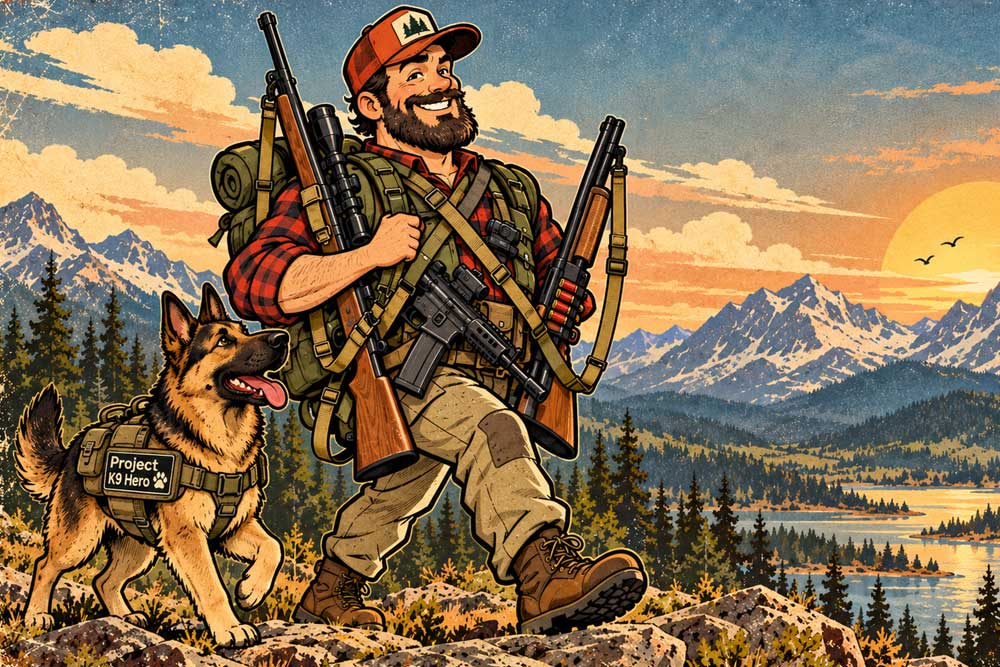
Walk several miles through the mountains carrying a scoped hunting rifle in your hands and you will quickly discover the value of putting it over your shoulder. Same concept, different environment.
The deer rifle might have a simple padded two-point sling. The short PCC might have a single point. The patrol rifle may have an adjustable two point. Different firearms, different uses, same basic problem.
You need to carry the firearm, and occasionally you need your hands.
We Even Attach Pistols to Ourselves
If you really want to take the idea to its logical conclusion, look at retention lanyards.
There are environments where simply having a pistol in a holster is not considered enough assurance that the firearm will stay with you. Maritime operations are an obvious example. Drop your sidearm on dry ground and you have a problem. Drop it into deep water and you may have a much bigger one.
Aviation and other specialized environments can create similar concerns, so people attach a retention lanyard between themselves and the handgun. Different equipment, different name, same philosophy.
Do not lose the firearm.
If we are willing to literally tether a holstered pistol to ourselves when the environment warrants it, attaching a sling to a rifle starts looking pretty reasonable.
Simple Equipment That Solves a Real Problem
A sling does not need batteries. It does not improve your ballistic coefficient. It does not make your groups smaller, and it does not give you another cool glowing dot to look through.
What it does is keep your firearm attached to you while allowing you to do everything else you need to do.
That is not particularly exciting. It is just useful.
And useful equipment tends to be the equipment that matters.
Pick a sling that fits your firearm and how you intend to use it. Adjust it. Train with it. Figure out what works and what annoys you, then make changes if you need to.
But put something on there.
If it’s long enough to shoulder, it probably deserves a sling.