
The Idea Behind Pocket Range
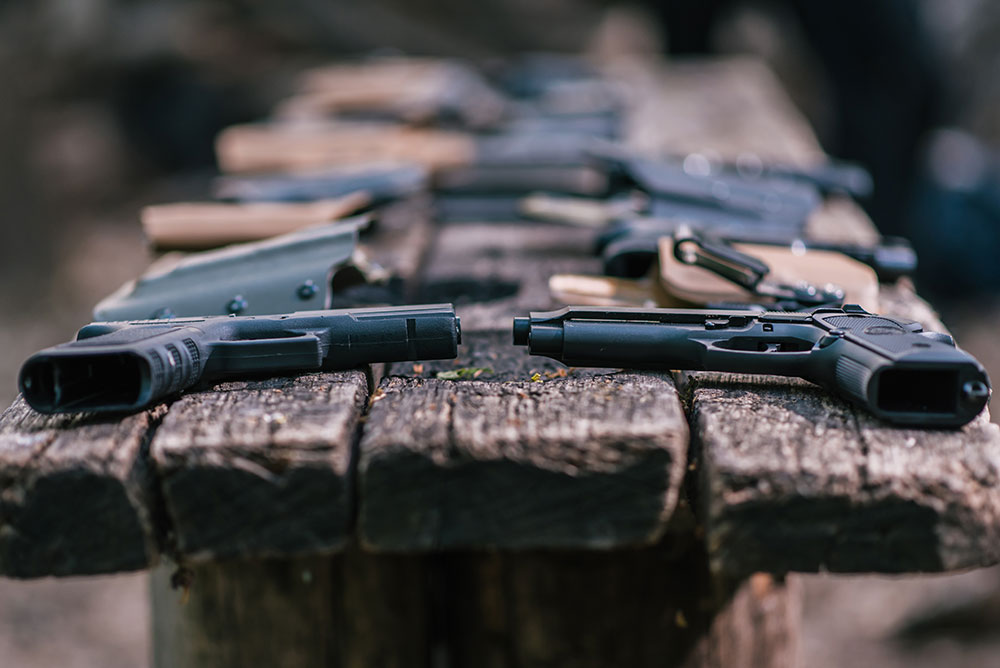
Pocket Range was inspired by a simple idea: meaningful target engagement doesn’t always require live ammunition or a full-distance range. Scale the targets correctly and a small training space can still demand precise sight alignment, trigger control, visual patience, and long-range discipline.
MILES and Early Exposure
I don’t intend to date myself here, but my first exposure to simulated engagement came before I even shipped to boot camp, while I was still in the Marine Corps Delayed Entry Program. We used the MILES system, which uses laser transmitters and sensors to register simulated hits without live ammunition.
We used it again in boot camp as part of the workup to our first rifle qualification, and I ran into it a handful of other times during my service. MILES was far more sophisticated than Pocket Range, but the basic training idea stuck with me: you don’t always need live fire or a full-distance range to create meaningful target engagement.
Training at Sea
That same lesson followed us aboard ship. When Marines deploy at sea, access to a normal live-fire rifle range is limited. On one carrier, time would be blocked out on the fantail deck, where we dry-fired at homemade targets.
There was nothing complicated about the setup. We had limited space, no live ammunition, and simple targets made from whatever was available. But we could still work sight alignment, trigger control, presentation, and the discipline required to engage a target.
Meaningful training doesn’t always require ideal conditions. Sometimes you work with the space and equipment you have.
From Concept to First Attempt
That experience eventually helped inspire Pocket Range. The original idea was to create targets that could simulate extremely long-distance shooting at close range. Could I use math to reduce the apparent size of a target so it looked the way it would at 1,000 yards? Could a shooter dial a firing solution, settle the reticle, and rehearse a clean trigger press without access to a 1,000-yard range?
The math worked.
The first target didn’t.
At close distance, the image through the rifle scope was blurry and useless. The reason became obvious once I tested it: most rifle scopes aren’t designed to focus clearly at the five to seven yards I had available.
So the scoped-rifle idea wasn’t going to work.
The Fix
A few days later, the solution hit me. Forget the scope.
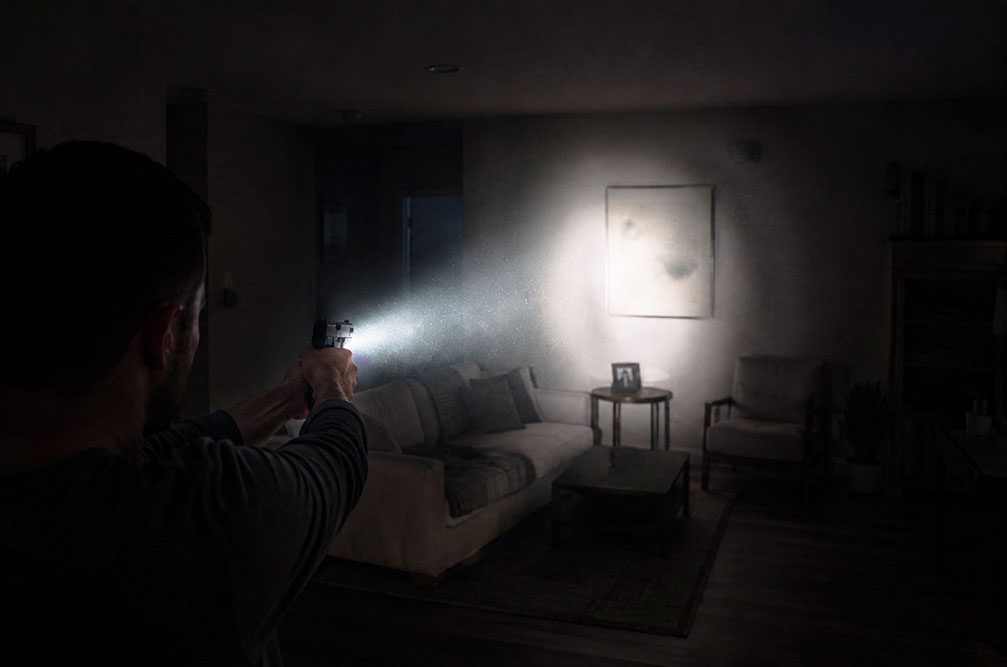
Iron sights, red dots, and 1X optics don’t have the same close-focus problem. I redid the math and produced a scaled 25-yard target that I could use for pistol dry-fire practice in my basement.
It worked.
I could practice sight alignment, trigger control, and shots on a target that demanded more visual attention than a full-size silhouette hanging a few yards away.
Building It Out
 From there, the idea kept growing. I wanted to use a carbine. I wanted to train from standing, kneeling, and other positions. I wanted to work target transitions, presentation, position changes, and move between targets at different simulated distances.
That’s how the rest of the Pocket Range system came together. Pocket Range is more refined than the homemade targets we used aboard ship and far simpler than MILES. But the principle is the same: scale the target, reduce the required space, and keep working the fundamentals.
You might not have access to a 300-yard range every week.
But you can still train like you do.